
Introduction
From defense collaboration to digital innovation, the India–U.S. partnership influences the Indo-Pacific’s security and global technology ecosystems.
Built on shared democratic values, mutual respect, and growing economic engagement, the relationship between the two nations is one of the most consequential of the 21st century. As global dynamics shift, the ability of both countries to balance shared goals with national priorities will define the next chapter of this strategic partnership.
Strategic and Economic Foundations
1. Defense & Technology Cooperation
India and the U.S. have strengthened defense collaboration across land, sea, air, cyber, and space domains. A ten-year framework for joint defense production and technology sharing is reportedly under discussion.

India’s status as a Major Defense Partner facilitates access to advanced equipment and research partnerships, reinforcing its role as a key security contributor in the Indo-Pacific.
2. Technology & Innovation Links
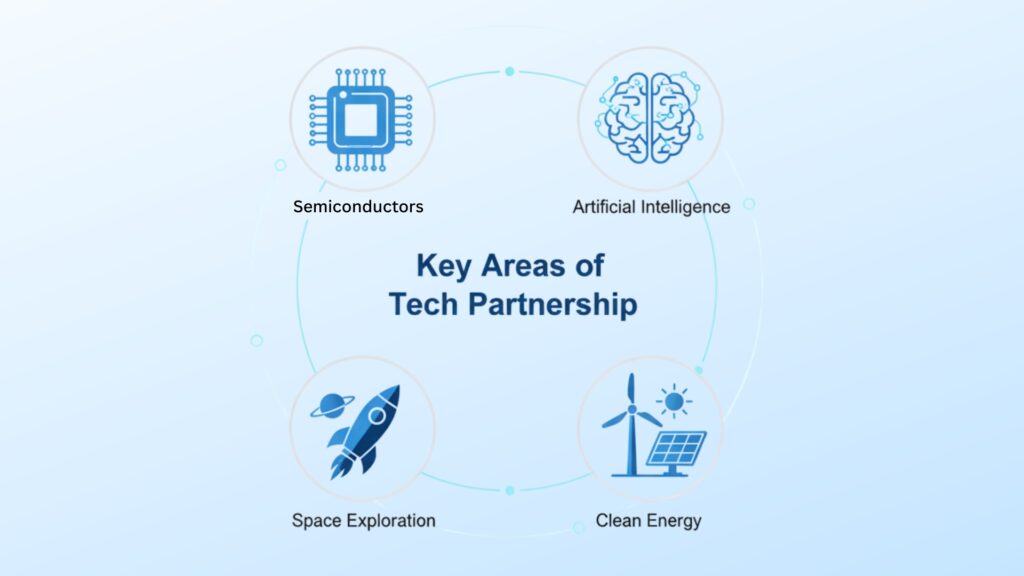
The partnership now extends into semiconductors, artificial intelligence, space exploration, and clean energy. Joint R&D and innovation hubs are fostering sustainable technological growth and strengthening India’s emerging role as a global tech hub.
3. Trade & Investment
Bilateral trade continues to expand. Indian firms maintain a strong footprint in the U.S., while American companies increasingly see India as a reliable partner for manufacturing and innovation. Both nations view this cooperation as essential for supply-chain resilience and long-term economic opportunity.
Navigating Differences

1. Trade and Market Dynamics
Recent discussions around tariffs and trade access are part of normal economic dialogue. India emphasizes domestic priorities and developmental needs, while the U.S. seeks balanced market opportunities, a common dynamic in mature trade relationships.
2. Strategic Autonomy
India’s policy of strategic autonomy reflects its independent approach to global diplomacy. Balancing relationships with multiple partners, including the U.S., allows India to maintain its sovereignty while contributing to regional and global stability.
3. Managing Expectations
While comprehensive trade frameworks take time, both governments highlight steady progress. Analysts view this as part of the partnership’s long-term evolution, not as friction or disagreement.
Recent Diplomatic Developments
Trade Deal Progress: Officials report that India and the U.S. are close to finalizing a trade understanding, with most issues resolved.
IMF Encouragement for Regional Integration: The IMF urges Asian economies, including India, to reduce trade barriers and enhance regional cooperation.
U.S. Senate Recognition: The Senate Foreign Relations Committee acknowledged India’s vital role in advancing peace and stability in the Indo-Pacific.
Why the Partnership Matters

Geopolitically: India and the U.S. anchor stability in the Indo-Pacific, alongside Quad partners.
Economically: India’s growth complements U.S. technology and capital, creating mutual opportunity.
Defensively: Collaboration strengthens India’s military capabilities while advancing regional security goals.
What to Watch Next
Will the trade framework mark a new milestone in bilateral cooperation?
How will India balance strategic autonomy with expanding defense and tech collaboration?
Can joint innovation and co-production define the next stage of defense cooperation?
Will shared democratic values continue to anchor the relationship amid evolving global dynamics?
Conclusion
The India–U.S. relationship stands at a pivotal moment rich in promise, guided by pragmatism, and grounded in shared democratic ideals. While challenges remain, both nations continue to approach them through dialogue, partnership, and a forward-looking vision.
The strength of this bond lies not only in agreements signed but in the mutual confidence that both countries bring to the global stage.
“The measure of this partnership is not in alignment alone, but in mutual respect and trust values that continue to define India–U.S. relations.”
Source Credits: AP News | Economic Times | Washington Post | Times of India
Team POV and inputs from Siddhanth S
If you notice any factual discrepancy or additional verified information, please share it with us so we can review and update the story accordingly.